Toronto permit data
Toronto building permit inspections: which ones and how to book
Published July 24, 2026
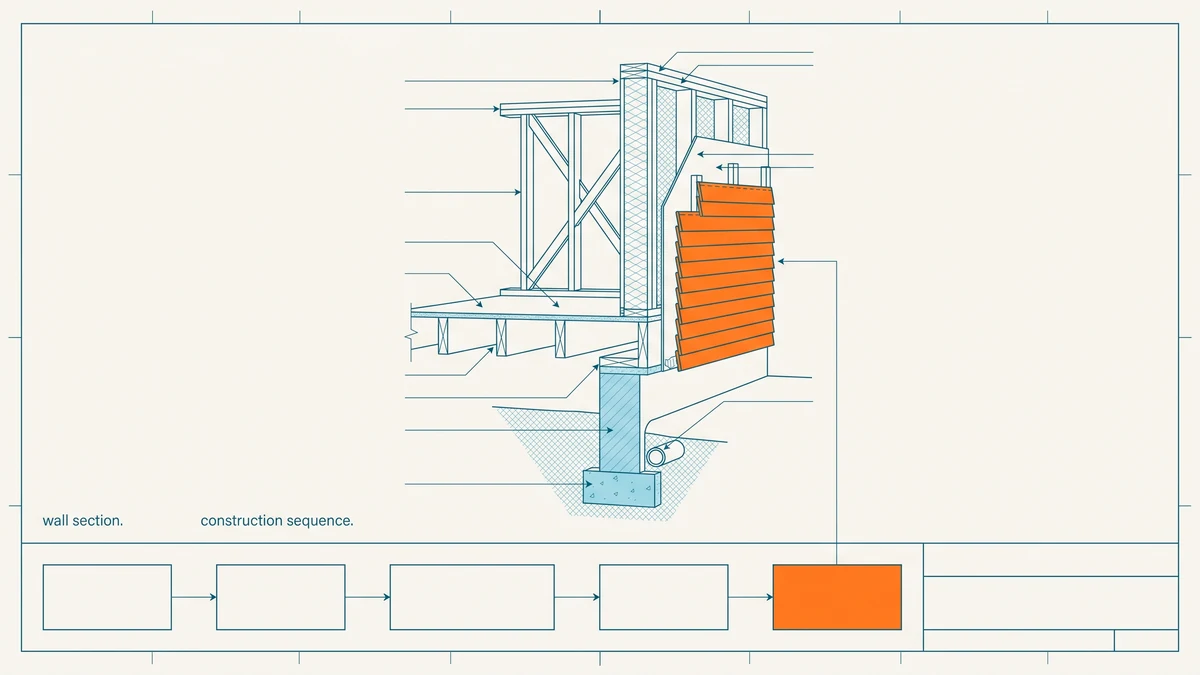
The short version
- A Toronto building permit comes with mandatory inspections at set stages of construction, and it is the permit holder's responsibility to call for each one.
- You book online through the City's inspection request portal or by phone, with your permit number and an on-site contact ready.
- Work covered up before its inspection can be ordered uncovered, so timing the call matters as much as making it.
- The permit stays open on the public record until a final inspection closes it, which is worth knowing before you sell or refinance.
Which inspections does a Toronto building permit require?
Short answer: Every Toronto building permit carries mandatory inspections at set stages of construction, and the permit holder is responsible for calling each one in. You book them through the City's online inspection request portal or by phone, and a final inspection is required before the City closes the permit.
Getting the permit issued is the halfway point, not the finish line. The Ontario Building Code requires the person doing the work to notify the chief building official when construction reaches each prescribed stage, so the City can look at the work before it disappears behind concrete, backfill, or drywall. Toronto Building explains the obligation on its building inspections pages, and the specific list for your project is set when the permit is issued.
The scale of this system is easy to underestimate. PermitIndex tracks 28,514 building permits issued in Toronto over the trailing twelve months as of Aug 26, 2026, and every one of them moves through some version of this inspection cycle before it can close. You can look up any Toronto permit by address and see where it currently stands.
What are the mandatory inspection stages for a house project?
For houses and small buildings, the ones covered by Part 9 of the Ontario Building Code, the City publishes a schedule of the stages an inspector needs to see. The exact set depends on your scope, but a full build or major renovation typically moves through:
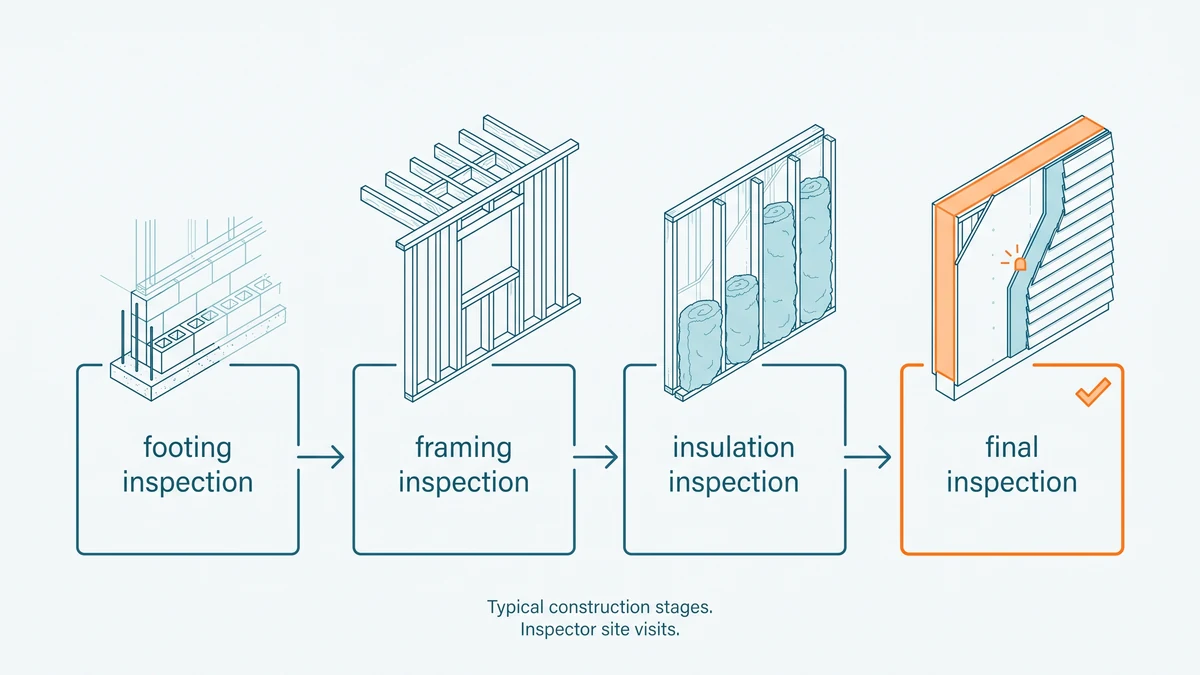
- Footings, at completion of formwork and before any concrete is poured.
- Foundations, once complete and before backfilling.
- Structural framing, including the rough-in of plumbing and HVAC.
- Fire separations, where walls, floors, or shafts separate units, before interior finishes go on.
- Insulation and vapour barrier, after installation and before interior finishes cover them.
- Final interior and final exterior, at completion of construction.
- Occupancy, where a building will be lived in before everything is finished.
Plumbing runs its own parallel stream: outside sewers and the water service are inspected before backfilling, the inside rough-in of drains, waste, and vents is inspected ready for testing, and fixtures are checked at completion. Heating and ventilation get a rough-in inspection before insulation covers the ductwork. The City's page on when to call for inspections on small buildings lists the full schedule, and a smaller project simply uses the subset that applies. A basement renovation, for example, usually sees framing and rough-ins, insulation, and a final.
When do you call for each inspection?
The rule of thumb is simple: call before the work you are asking about gets covered. Footings are checked before the pour because rebar inside cured concrete cannot be checked at all. Foundation drains and sewers are checked before backfilling. Framing and rough-ins are checked before insulation, and insulation is checked before drywall. Each stage has a short window where the work is done but still visible, and that window is when the notice goes in.
Miss the window and the fix is expensive. If an inspector cannot see the work, the City can require finished surfaces to be opened up so the covered stage can be inspected and passed. That is drywall coming down or backfill coming out, at your cost. Builders who run smooth projects treat the inspection call as part of the stage itself: the framing is not done until the framing inspection is booked. Keep the approved permit drawings on site as well, since the inspector can ask to see them at any visit, along with everything else issued as part of the permit. If the built work has drifted from those drawings, sort that out first: our guide to permit revisions in Toronto covers how.
How do you book a building inspection in Toronto?
Two channels, both run by Toronto Building. The faster one is the City's online inspection request portal, which is available around the clock and also lets you reschedule or cancel a booking and view your upcoming inspections. You will need the permit number and the contact details of whoever will be on site to meet the inspector.
The other channel is by phone, at 416-338-0700, on weekdays during business hours as published by the City. If you leave a voicemail, the request is not actually scheduled until an agent calls back, so the portal is the safer route when a concrete pour is waiting on the visit. Inspections themselves happen on business days, and the City's current rules on how far ahead you can book, and how the inspector confirms a time on the day, are on the request page above. Treat those specifics as things to check at booking time rather than assumptions to build a schedule on, because they change.
Who requests the inspection, you or your contractor?
Responsibility follows the permit. Whoever holds the permit is on the hook for making sure the mandatory notices happen, even if a contractor is managing the day-to-day. In practice, on a well-run job the contractor books stage inspections as part of the work, because they control the schedule and know when each stage is genuinely ready. But if the permit is in your name and no one calls for the framing inspection, that problem lands on you, not the framer.
This is the same logic that decides who pulls the permit in the first place, and it is worth settling in writing before work starts: who books each inspection, who meets the inspector, and who fixes anything the visit turns up. If you are still at the application stage, our guide on how to apply for a building permit in Toronto walks through the sequence that leads up to this point.
What happens at the final inspection?
The final inspection is what closes the file. The inspector confirms the completed work matches the approved drawings and the Ontario Building Code requirements visible at completion, for the interior and the exterior. Where a home will be occupied before every last item is complete, an occupancy inspection can come first, and the City sets conditions for that; your inspector is the authority on what applies. Once the final passes, the permit can be closed.
Quotable: A Toronto building permit is not finished when the construction is. It stays open on the City's record until a final inspection closes it, and it is the permit holder, not the City, who has to call for that inspection.
Skipping the final is one of the most common ways a permit ends up sitting open for years. The work is done, everyone moves on, and the file quietly stays active until a lawyer, a lender, or a buyer's agent finds it during a transaction and asks why.
How do inspections show up in the public permit record?
The City's open permit data records each permit's status, and permits that have been issued and are in construction typically show an inspection-stage status until they close. What the public record does not contain is the inspection detail: no pass or fail results, no deficiency notes, no inspector comments. So a permit record answers "is this project's paperwork open or closed," and stays silent on how any individual visit went. That applies to our Toronto data too, since we publish what the City publishes.
That still makes the record useful. Before buying, you can search the address and see whether permits on the property are closed out or still open, which is exactly the question an unclosed final inspection creates. And if you are planning a project and wondering about the approval side rather than the inspection side, the Toronto permit wait times page reports the median lag from application to issuance by trade, or read how long a Toronto building permit takes.
How these numbers are calculated
The one statistic on this page, the count of Toronto building permits issued in the trailing twelve months, renders live from the seo_citywide_12mo aggregate over the City of Toronto's open dataset of active building permits, stamped with the newest issue date in that data. It is Toronto-only and refreshes as the City's record does.
The dataset covers permits currently on record, and records leave it as projects close out, so the count describes the present active register rather than a historical census. Inspection results are not part of the dataset, which is why this guide describes the process qualitatively and defers to Toronto Building for the rules that apply to a specific project. Sourcing details are on the data sources page.
Frequently asked questions
- Do I need an inspection for every building permit in Toronto?
- In practice, yes. Even a small project carries at least a final inspection, because the City requires one to close the permit. Larger projects add stage inspections along the way, and the exact list depends on the scope of work, so confirm yours with Toronto Building when the permit is issued.
- Can I close a building permit without a final inspection?
- No. The City requires a final inspection to confirm the work matches the approved drawings before the permit file is closed. Skipping it leaves the permit open on the record, which tends to surface later during a sale, a refinance, or an insurance claim.
- What happens if work gets covered before its inspection?
- The inspector has to be able to see the work being inspected. If framing, plumbing, or insulation is covered before its mandatory inspection, the City can require it to be uncovered and passed before the project can finish. That usually costs far more than waiting for the visit would have.
- How far in advance should you book a Toronto inspection?
- The City's online portal lets you request a date in advance, generally starting from the next business day. Booking windows and same-day availability change, so check the City's request page for current rules before you schedule a concrete pour or a covering stage around an inspection.
- Does a passed inspection mean the work is good quality?
- Not exactly. An inspection checks that the work visible at that stage complies with the Ontario Building Code and the approved drawings. It is not a warranty of workmanship, and inspection results are not part of the public permit dataset, so a permit record tells you the paperwork state, not the craftsmanship.