Toronto permit data
How to Verify a Basement Apartment Is Legal
Published July 24, 2026
The short version
- A legal basement apartment clears three separate regimes at once: local zoning, the Ontario Building Code through a building permit, and the Ontario Fire Code.
- The fastest check anyone can run is a permit search on the address. A unit created legally leaves a permit trail, and the trail is public.
- A fire retrofit certificate alone does not make a suite legal. 'Retrofit' in a listing is a claim to verify, not proof.
- Older two-unit houses can be legal under different rules than newly built suites, so the unit's vintage changes what evidence to ask for.
- Some municipalities keep a registry of legal second units; Toronto does not, which makes the permit record the primary paper trail there.
How do you know if a basement apartment is legal?
Short answer: Verify it against three regimes, not one. A legal basement apartment complies with the local zoning by-law, was built or converted under a building permit to the Ontario Building Code, and meets the Ontario Fire Code's requirements for two-unit houses, with electrical work inspected by the Electrical Safety Authority. If any one of those is missing, the unit is not legal, whatever the listing says.
Nobody advertises an illegal suite as illegal. Listings say "legal basement," "retrofit," or "in-law suite with separate entrance," and each of those phrases means something different, or nothing at all. The good news is that a legally created unit leaves a paper trail you can actually check: a permit on file, inspections that closed it out, electrical sign-off, and in some municipalities a registry entry. This guide walks through the checks in the order a renter or buyer can realistically do them.
What makes a basement apartment legal in Ontario?
Legality is a stack of separate approvals, and the unit needs all of them.
- Zoning permission. The municipality's zoning by-law has to allow a second unit on that property. Ontario's planning rules have pushed municipalities to permit additional residential units broadly, but the details, such as parking and lot requirements, are local. The province's overview of adding a second unit explains the framework; the ruling text is the local by-law.
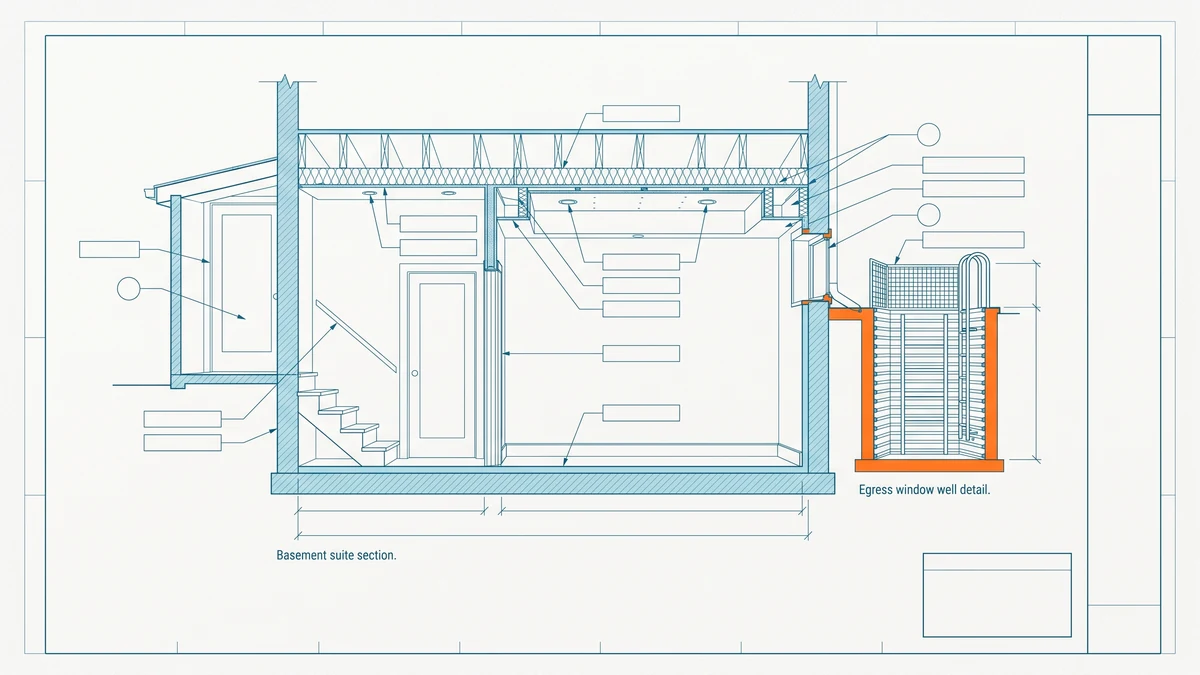
- A building permit. Creating a self-contained unit is construction that requires a permit under the Ontario Building Code. In Toronto that application is reviewed as a secondary suite, covering fire separation between units, exits, ceiling heights, and smoke and carbon monoxide alarms. The permit, and the inspections that close it, are what prove the work was reviewed.
- Fire Code compliance. The Ontario Fire Code has a dedicated section for two-unit residential occupancies. It applies to the house as it operates, not just as it was built, which is why fire services can inspect an existing suite independently of any construction history.
- Electrical inspection. Electrical work in Ontario runs through the Electrical Safety Authority's permit and inspection system, separate from the municipal building permit. A converted basement with no ESA record is a red flag on its own.
Quotable: A legal suite leaves a paper trail. Zoning permission, a building permit, closed inspections, and electrical sign-off all generate records, so the fastest way to test a "legal basement" claim is to look for the trail rather than trust the adjective.
How do you check the permit record for the address?
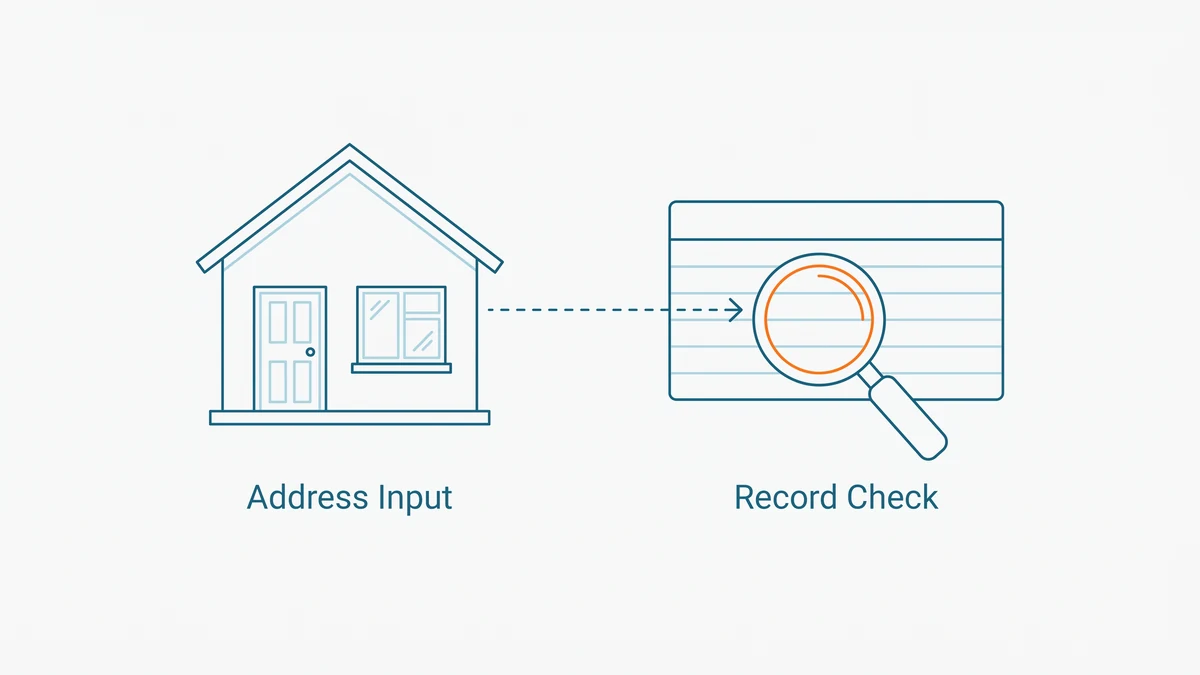
Search the address before you ask anyone anything. Building permits are public information, and in Toronto the City publishes its active permits as open data, which is the record PermitIndex indexes. You can search any Toronto address and see the permits the City currently holds for it, classified by type and dated, in seconds. A basement apartment that was created legally in recent years should show a matching permit: typically an interior alteration creating a second dwelling unit, or a suite within a larger renovation.
The scale of that record is worth knowing: PermitIndex currently indexes 28,514 Toronto building permits issued in the trailing twelve months as of Aug 26, 2026, drawn from the City's open data. That figure is Toronto only, because Toronto is the dataset we ingest.
Two caveats keep this check honest. First, the City's open dataset covers active permits, and records leave it as projects close out, so an empty result for an older conversion means nothing is currently on the active register, not that no permit ever existed. For older units, the City's building records counter can confirm the historical file; our guide to the permit history of a house covers how. Second, a permit alone is not the finish line. A permit that was issued but never inspected to completion leaves the work unverified, which is a question to put to the seller or the City directly.
Does the age of the unit change the rules?
Yes, and this is the part most listings blur. Ontario's Fire Code retrofit rules for two-unit houses were written for suites that already existed by the mid-nineteen-nineties. Toronto's fire safety guidance on two-unit houses describes the retrofit regime as applying to houses with a second suite as they existed on or before July 14, 1994. A unit with that vintage can be lawful through Fire Code retrofit compliance and legal non-conforming zoning status, even though it never went through a modern secondary-suite permit.
A unit created after that era does not get the retrofit shortcut. It needed a building permit to the Building Code standards of its day, full stop. So the question to ask changes with the unit's age. For an older suite: is there evidence of Fire Code retrofit compliance, such as a fire inspection letter, and does the municipality accept the unit's zoning status? For a newer suite: where is the building permit, and did its inspections close? A seller who says "it's grandfathered" is making a specific, checkable claim about when the unit came into existence, and the burden of showing that sits with them, not with you. When the claim matters, put it to the municipality rather than accepting it at the kitchen table.
What documents should you ask the landlord or seller for?
Ask for the trail, not assurances. A legitimate owner of a legal unit can produce some combination of the following, and the asking itself is diagnostic: owners of legal suites tend to answer quickly, because the paperwork was expensive to earn.
- The building permit that created the unit, with its final inspection or closure. In Toronto you can cross-check the address against the public record yourself before you ever raise it.
- An ESA certificate or record of electrical inspection for the conversion work.
- Fire Code documentation. For older retrofit-era units, a letter or inspection record from the municipal fire service addressing the two-unit retrofit requirements.
- A registry entry, where one exists. Some municipalities record legal second units in a public registry, covered below.
- Working life-safety basics you can see: interconnected smoke and carbon monoxide alarms, a fire-rated separation between units, and a way out of the bedroom and the unit that does not pass through the other suite. These are not a substitute for the documents, but their absence contradicts them.
For what the physical unit itself must provide, ceiling heights, exits, window sizes and the rest, see our pillar guide to legal basement requirements in Ontario. Those specifics are the Building Code's to state, and the numbers belong to the current code, not to a blog's summary.
Is a registered second unit the same as a legal one?
No, and the difference matters when you move between municipalities. Registration is a municipal inventory step layered on top of legality. Brampton and Mississauga, for example, require second units to be registered with the city, so in those cities a registry lookup is a strong first check; our guide to legal basement permits in Brampton walks through that process. Toronto takes a different approach: it has no second-suite registry, and legality rests on zoning, the building permit, and the codes directly.
The practical consequence runs in both directions. In a registry city, absence from the registry is a serious warning sign even if the unit looks finished and safe. In Toronto, nobody can show you a registry entry, so the permit record does the work the registry would, which is why the address search is the natural first step there. In every case, registration or a permit is evidence about the unit as it was approved; a suite renovated since approval can drift out of compliance without any record changing.
What are the warning signs of an illegal suite?
Certain patterns show up so often in unauthorized basement units that they justify walking away or digging harder.
- A bedroom with no window, or windows too small and high to escape through.
- One way out, through the other unit or up a single shared stair.
- Ceilings low enough to touch, ducts you have to duck under, or a furnace room opening directly into living space.
- No permit match in the public record for a unit that is plainly a recent conversion.
- A landlord or seller who cannot produce any of the documents above, offers cash-only terms, or describes the unit as "as-is."
- Listing language that leans on "in-law suite" or "separate entrance" while avoiding the word legal entirely.
None of these alone is a verdict. Together with an empty paper trail, they usually are. If you are buying, the stakes are larger than the rent cheque: a house marketed with rental income from an unauthorized unit is priced on income it may not legally produce, and our guide to second suite permits in Toronto covers what legalizing after the fact involves. Where safety is the concern in a unit you already occupy, the municipal fire service is the right call, and Ontario's second unit guidance is the plain-language starting point for what a compliant unit provides.
How these numbers are calculated
The one statistic on this page is the number of building permits issued in the City of Toronto in the trailing twelve months, computed live by the citywide aggregate over the City's open dataset of active building permits and stamped with the newest issue date in that data. It is not a hand-entered figure and it refreshes as the City's record does.
Two limitations apply. The City publishes permits that are currently active, so records leave the dataset as projects close out; the count describes permits presently on record, not a complete historical census, and it is Toronto only. And everything here about what makes a suite legal summarizes published guidance from the City of Toronto, the Ontario Building Code, and the Ontario Fire Code, linked at each claim; it is not a ruling on any specific unit. For the underlying dataset and its licence, see the data sources page.
Frequently asked questions
- Is a retrofit basement apartment the same as a legal one?
- Not by itself. Retrofit refers to the Ontario Fire Code's rules for existing two-unit houses. A suite can satisfy the fire retrofit and still be offside on zoning or missing the building permit that authorized its construction. Legal means all of the regimes are satisfied, not one of them, so treat a retrofit claim as one piece of evidence rather than the conclusion.
- Who do I call to check if a basement apartment is legal?
- Start with the municipality's building or zoning department for the address, since they hold the zoning rules and the permit file. Municipal fire services handle Fire Code questions for two-unit houses, and the Electrical Safety Authority can confirm whether electrical work was inspected. In Toronto you can also search the public permit record yourself first, which usually tells you what to ask about.
- Can a landlord rent out an illegal basement apartment in Ontario?
- Renting an unauthorized unit exposes the landlord to municipal enforcement, and tenants in such units generally still have rights under Ontario's tenancy law. For a tenant the bigger issue is practical: an illegal unit may lack the fire separations and exits that make it safe, and an enforcement order can put the tenancy itself at risk. Verifying before signing avoids inheriting that problem.
- Does an illegal basement apartment affect home insurance?
- It can. Insurers generally expect a dwelling to be accurately described, and an undisclosed or unauthorized second unit can complicate or void a claim, particularly after a fire. Anyone buying a house marketed with basement rental income should confirm the unit's status before closing rather than discover it during a claim.
- Is a legal basement apartment the same as a registered second suite?
- They overlap but are not identical terms. Legal means the unit complies with zoning, building, fire, and electrical requirements. Registered means the municipality has recorded the unit in its second-unit registry, which some Ontario municipalities require and others, including Toronto, do not maintain. A unit can be legal in a city with no registry, and appearing in a registry is strong evidence but still worth pairing with the permit record.