Toronto permit data
Building permit cost in Toronto: full 2026 fee table
Published July 24, 2026
The short version
- Toronto prices most permits by floor area: a published rate per square metre that varies by building type, with a flat minimum fee for small jobs.
- The base fee comes from the City's fee schedule, not from your construction budget, so two projects with the same floor area pay the same base fee.
- Small standalone jobs such as decks and porches usually land at the minimum fee.
- Fees are paid up front and a permit is not issued until they are settled; partial refunds apply if you cancel, and the City's live schedule is always the final word.
How much does a building permit cost in Toronto?
Short answer: Most small residential permits in Toronto cost the City's flat minimum fee, set at $214.79 in the schedule the City published as effective January 1, 2026. Larger projects pay a rate per square metre of floor area that depends on the building type, so a permit for a new house is priced by its size, not by your renovation budget. The authoritative rates live on the City of Toronto's building permit fees page.
There is no quote and no negotiation. Toronto prices permits with a formula, and every number in that formula is published. That makes the fee the most predictable line in a construction budget, and also the smallest one that people worry about the most. This guide walks through the formula, the 2026 fee table, what common home projects actually pay, and where the real costs hide.
How does Toronto calculate building permit fees?
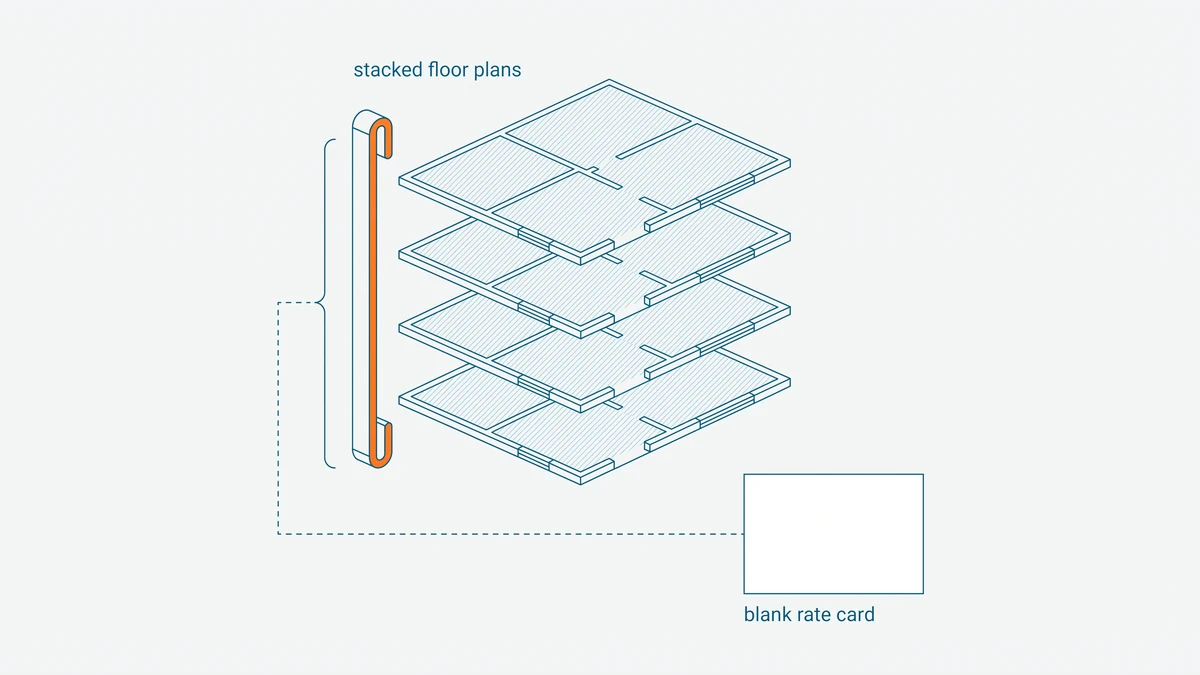
One formula covers almost everything: the permit fee equals a service index multiplied by floor area. The service index is a dollar rate per square metre that the City assigns to each class of work, and the floor area is the area of the work you are proposing. Multiply the two, and if the result comes in below the minimum fee, you pay the minimum instead.
Two other published figures matter. The first is the minimum fee itself, which applies to all work regardless of size. The second is an hourly examination and inspection rate, listed at $92.79 in the 2026 schedule, which the City can charge for review effort beyond the standard scope. Both figures are on the City's fee page, and both change over time, so treat any figure in any guide, including this one, as a snapshot of the published schedule rather than a promise.
The practical consequence of the formula: your architect's fees, your contractor's price, and the finish level of your renovation do not move the permit fee at all. Floor area and building class do.
Toronto building permit fee table for 2026
The table below is abridged from the schedule the City published as effective January 1, 2026. Rates are the City's service index per square metre of floor area unless noted. The full schedule runs to dozens of work classes, so confirm your exact class on the City's building permit fees page before you budget.
| Work class | Published 2026 rate | |---|---| | Minimum fee, any permit | $214.79 flat | | New house (single family, semi, townhouse) | $18.56 per m² | | New residential unit fee | $56.33 per unit | | Residential interior alterations | $11.53 per m² | | Residential deck, porch, or carport | Flat minimum fee | | Hotel, new construction | $29.38 per m² | | Office, finished (including clinics) | $24.46 per m² | | Office shell | $19.56 per m² | | Retail, finished | $20.77 per m² | | Retail shell | $15.76 per m² | | Restaurant, finished | $30.94 per m² | | Recreation facility or place of worship | $30.94 per m² | | Hospital or nursing home | $32.93 per m² | | Warehouse shell (under 7,500 m²) | $12.37 per m² | | Parking garage | $8.10 per m² | | Hourly examination or inspection rate | $92.79 per hour |
If a calculated fee lands below the minimum, the minimum applies. These are the City's published rates, reproduced here with the date they took effect; the live schedule on toronto.ca is the version that binds.
How much does a permit cost for common home projects?
Worked against the published 2026 rates, the common residential cases look like this. A deck, porch, or carport is listed at the flat minimum, so budget a little over two hundred dollars for the permit itself; the drawings usually cost more than the fee. Our deck permit cost guide covers when a deck needs a permit at all.
A basement renovation is priced at the residential interior alteration rate. At the published 2026 figures, a 40 square metre basement works out to roughly $460, and smaller jobs fall to the minimum fee. The basement renovation permit cost guide breaks that project down in detail.
A new house is the per-square-metre formula at full stretch. At the published 2026 rate for single family dwellings, a 200 square metre house computes to roughly $3,700 in base permit fee, plus the per-unit fee for each new residential unit. Real applications often add revisions and extra review time on top.
Replacing windows with the same size in the same opening generally requires no permit in Toronto, and where a permit application does include window replacement in a single family home, the City's schedule lists it at no charge. You can see what window and door work actually gets permitted on the Toronto windows and doors permit page. For any borderline case, Toronto Building makes the call, not a blog.
What does the permit fee not cover?
The permit fee buys plan examination and inspections under the Building Code Act. Everything else is a separate line, and the separate lines are usually bigger.
Design work sits outside the fee: drawings, and where required, an engineer's review, are private costs you pay before the City sees anything. Approvals other than the building permit are also separate. A minor variance at the Committee of Adjustment, a permit to injure or remove a protected tree, and utility connection charges each carry their own fee schedules. For larger projects, development charges can exceed the permit fee by orders of magnitude, and they are levied under a different bylaw entirely.
So when a contractor quotes "permits" as a single line, ask what is in it. The building permit fee itself is formulaic and public. The costs around it are where estimates drift, and none of them appear in the City's permit fee table. Our Ontario-wide permit cost guide covers how these layers stack in other municipalities.
When do you pay, and what happens if you cancel?
Fees are due with the application, and the City does not issue a permit until all fees are paid. As published on the City's fee page, credit card payments are accepted up to a stated cap, larger balances move by electronic funds transfer, and cheques are no longer accepted.
Cancellation is not a total loss. The City's published refund rules return the largest share when you cancel before review begins, a smaller share once review has started, and a reduced amount, less the minimum fee, if a permit was issued and then revoked. Refund requests carry a deadline of one year, and some products, such as preliminary reviews, are not refundable at all. The exact percentages are on the City's building permit fees page, and they are worth reading before you file an application you are not sure about, because the cheapest moment to cancel is before a plans examiner opens the file.
Why is the fee based on floor area instead of project value?
Toronto's structure is deliberate. Pricing by floor area and building class makes the fee objective: the City never has to argue with an applicant about what a renovation is really worth, and an applicant cannot shrink the fee by declaring a low construction value. The same drawing set produces the same fee every time.
Other Ontario municipalities take the opposite approach and charge a percentage of declared construction value, which is why the same project can carry a different permit fee in a neighbouring city, and why generic Ontario cost guides disagree with each other. Neither method changes what review you get; they are just different ways to fund the same Building Code function. If you are pricing a project outside Toronto, check that municipality's own schedule rather than extrapolating from this table, and see how Toronto calculates its fees for the mechanics behind the service index. For what triggers the permit requirement in the first place, our guide to what requires a building permit in Ontario covers the thresholds.
What Toronto's permit data shows about the fee
The fee is small next to the work it authorizes. Toronto issued 28,514 building permits in the trailing twelve months as of Aug 26, 2026. Among them, the 10,137 permits that disclosed a construction value totalled $14,673,846,387 of declared work; the rest, roughly forty-five percent of permits, do not disclose a value, so the real total is higher. Set a few hundred dollars of permit fee against numbers like that and the fee is a rounding error on almost any project.
Quotable: In Toronto, the building permit fee is the most predictable cost in a construction project: it is computed from floor area and a published rate, while the costs around it, design, development charges, and construction itself, are where budgets actually move.
What the fee does buy, beyond legality, is a record. Every permit becomes a public entry you can check later, which matters when you sell. You can search Toronto building permits by address to see what has been filed on any property, and the Toronto permit wait times page shows the median lag between applying and getting the permit, by project type, from the same records.
How these numbers are calculated
The fee figures on this page are not PermitIndex data. They are reproduced from the City of Toronto's published building permit fee schedule, effective January 1, 2026, and linked at each point of use; the City's live page is authoritative and rates change over time.
The permit counts and the construction value figure are computed live by seo_citywide_12mo, which aggregates permits issued in the City of Toronto over the trailing twelve months in the City's open dataset of active building permits. The dollar figure describes only the subset of permits that disclosed a construction value, which is stated beside the number; roughly forty-five percent do not disclose one. Because the City publishes currently active permits and records leave the dataset as projects close out, these figures describe permits presently on record, not a historical census, and they are Toronto-only. Full sourcing is on the data sources page.
Frequently asked questions
- Is the permit fee based on the value of my construction project?
- Not in Toronto. The City calculates the base fee from floor area and building type, using a published rate per square metre, so your construction budget does not change the permit fee. Some other Ontario municipalities do price permits as a share of construction value, which is one reason quotes vary so much between cities.
- Do I pay the building permit fee when I apply or when the permit is issued?
- Toronto collects fees with the application, and a permit is not issued until all fees are paid. Budget for the fee up front rather than at pickup. Payment methods and limits are set out on the City's fee page.
- Can I get my permit fee back if I cancel the project?
- Partially. The City refunds a larger share if you cancel before review begins and a smaller share once review has started, and refund requests have a deadline. The exact percentages are published on the City of Toronto's building permit fee schedule.
- Does the permit fee include development charges or other approvals?
- No. The permit fee covers plan review and inspections under the Building Code Act. Development charges, Committee of Adjustment applications, tree permits, and utility connections are separate costs with their own schedules.
- Are building permit fees the same everywhere in Ontario?
- No. Each municipality sets its own fee schedule under the Building Code Act, and both the rates and the method of calculation differ from city to city. Always price your project against the schedule of the municipality that will issue the permit.