Toronto permit data
Buying a House With Unpermitted Work in Ontario
Published July 24, 2026
The short version
- In Ontario, responsibility for unpermitted work transfers with the property. After closing, the municipality's remedy is against you, not the seller.
- Check before you waive conditions. Search the permit record against the renovations you can see, and put any gap in writing to your inspector and lawyer.
- A permit search and a home inspection answer different questions. Unpermitted work is the gap between what was authorized on paper and what is physically there.
- If you find a gap, you have three levers: make the seller legalize or close permits before closing, negotiate the price, or walk. All three are cheaper before closing than after.
What happens if you buy a house with unpermitted work in Ontario?
Short answer: The problem becomes yours. In Ontario, a municipality enforces building rules against the property's current owner, so once you close, an order to legalize or remove unpermitted work lands on you, not on the seller who did it. The time to catch it is before you waive conditions, and the first check is free: compare the renovations you can see against the permit record for the address.
That is the whole risk in one sentence, and it is why "was this permitted" belongs on the same checklist as the home inspection and the financing condition. The rest of this guide covers how to check, what the City can actually require of you, what legalizing involves, and what to negotiate when the record and the house do not match.
One scope note up front: the process advice applies across Ontario, but every statistic on this page comes from Toronto's open permit data and describes Toronto only.
How do you check for unpermitted work before you offer?
Start with the paper. For a Toronto address, search the property on PermitIndex and read what the City holds on record: the type of work, the dates, and each permit's status. The index currently covers 28,514 Toronto building permits issued in the trailing twelve months as of Aug 26, 2026, drawn from the City's open data. Then walk the house and compare. A finished basement, a rebuilt deck, a new bathroom where a closet used to be: each visible renovation either has a matching permit or it does not.
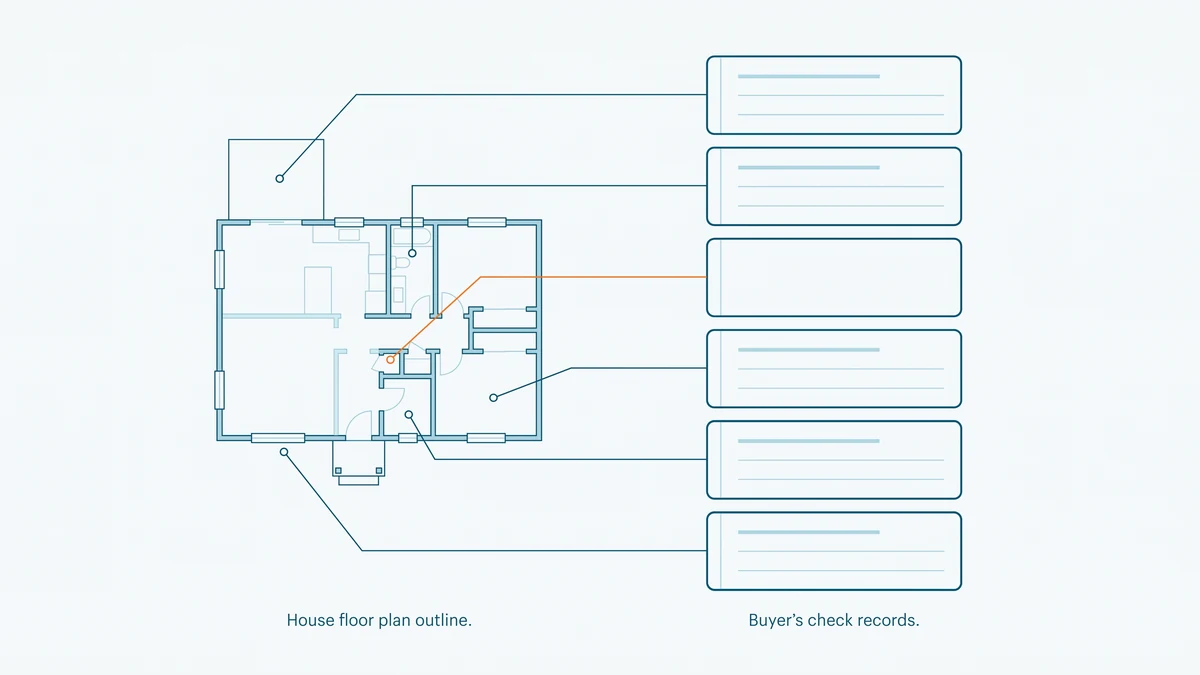
Three caveats keep this honest. First, the City's open dataset covers active permits, and records age off as projects close out, so an empty result on an older renovation is not proof it was unpermitted. Our guide to the permit history of a house explains how to go deeper, including requesting the property's full building records file from the City. Second, minor work often needs no permit at all, so a missing permit is a question, not a verdict. Third, a permit search shows authorization, not quality. Pair it with a home inspection, and treat anything visible on site with no paper behind it as an open item for the seller.
Quotable: A permit search shows what was authorized on paper. A home inspection shows what is physically there. Unpermitted work is exactly the gap between the two, and neither check finds it alone.
Who is responsible for unpermitted work after closing?
The current owner, which after closing means you. Ontario's Building Code Act gives municipalities order powers over buildings that were constructed without required permits, and those orders attach to the property regardless of who swung the hammer. Toronto's own guidance on working without a permit is blunt about the principle: the homeowner is responsible for the consequences even when someone else assured them permits were not needed.
The seller's position is protected by an old rule: caveat emptor, buyer beware. In Ontario, a seller generally has no duty to volunteer that work was done without a permit, and once the deal closes your ability to demand anything from them largely vanishes. There are exceptions for concealed defects and misrepresentation, but they are argued in court, slowly, after you already own the problem. The practical reading is simple. The system puts the burden of discovery on the buyer, before closing, so that is when your leverage exists. Use the conditional period to check the record, and put questions to the seller in writing while their answers still matter.
What can the City actually make you do?
If Toronto Building becomes aware of unpermitted work, the standard path is an order requiring the owner to bring the situation into compliance: stop any ongoing work, apply for the missing permit, and correct anything that does not meet the Building Code. Our pillar guide to building without a permit in Ontario walks the enforcement machinery in detail, and the companion guide covers fines and how legalization works.
Three costs matter to a buyer weighing a purchase. The permit itself: Toronto charges an additional administrative fee for work started without a permit, calculated from the normal permit fee, with the current structure published on the City's working without a permit page. The proof: legalizing finished work usually means as-built drawings, and an inspector may require opening up walls or ceilings to verify what is hidden inside them. The downside case: work that cannot be made compliant can be ordered removed at the owner's expense. Prosecution and fines are possible under the Act, though for a buyer the routine risk is the compliance bill, not the courtroom. None of this is hypothetical once an order exists, which is why the price of the house should reflect it.
How long does legalizing unpermitted work take?
A permit for work already done goes through the same intake and review as any other application, so the observed pace of Toronto permitting is a fair floor for planning. Among Toronto permits issued in the trailing twelve months and currently on record, the median lag from application to issuance was 32 days, and one application in ten waited longer than 218 days as of Aug 26, 2026. Those figures are observed issuance lags in the City's record, not a service commitment, and a retroactive file that needs new drawings or triggers code corrections can run past them. The Toronto permit wait times page breaks the same measurement down by trade and area, and the guide to retroactive permits covers the process itself.
Quotable: A retroactive permit waits in the same queue as everyone else's application. Buying a house with unpermitted work means inheriting that queue, plus the cost of proving what is already behind the drywall.
For a buyer, the point is timing. If your plan is "close, then legalize the basement," the permit clock starts after closing, on your ownership and your budget.
How do you protect yourself in the offer?
Leverage exists between the day you find the gap and the day you close, so spend it there. The standard moves, each one for your lawyer to draft rather than a template: make the offer conditional on a review of permits satisfactory to you; require the seller to obtain final permits, or close out open ones, before closing; negotiate a price reduction or a holdback that reflects the estimated cost of legalizing; and have your lawyer make off-title inquiries with the municipality, since permits and enforcement files do not appear on a title search. Ask your lawyer what your title insurance policy actually says about pre-existing unpermitted work, because coverage varies and the time to learn its limits is before closing.
Sellers respond to specifics. "The listing says the basement was renovated and the record shows no permit for it" is a negotiating position; a vague worry is not. This is general information, not legal advice, and Ontario purchase contracts are exactly the place where a real estate lawyer earns their fee.
Does this change outside Toronto?
The legal shape is the same across Ontario: permits are municipal, enforcement targets the current owner, and buyer beware is the default. What changes is how easy the checking is. Toronto publishes its active permits as open data, which is what makes the compare-the-record step a search box instead of a records request. Many other municipalities hold the same information but release it by phone, at a counter, or through a formal request, so budget more lead time inside your conditional period.
Be equally clear about what this site covers: PermitIndex indexes Toronto's data only, and every number above is a Toronto number. For a house elsewhere in the province, the workflow still applies, but the local building department is your source. For a Toronto address, search the permit record before you book anything else. It is free and takes less time than reading the listing.
How these numbers are calculated
Two statistics appear on this page, both computed live from the City of Toronto's open dataset of active building permits and scoped to Toronto. The count of permits issued in the trailing twelve months comes from the seo_citywide_12mo aggregate. The median and ninetieth-percentile issuance lags come from seo_wait_citywide, which measures the days between each permit's application date and issue date in SQL over the same trailing twelve-month window, dropping records where the issue date precedes the application date. We publish medians, never averages, because a small number of long-running projects would otherwise distort the figure, and any group with fewer than thirty matching records gets no number at all.
The known bias: the City publishes permits that are currently active, and records leave the dataset as projects close out. Every figure here describes permits presently on record, not a complete historical census, and wait figures are observed issuance lags, not a City processing commitment. Sourcing and licence details are on the data sources page.
Frequently asked questions
- Can I sue the previous owner for unpermitted renovations?
- Sometimes, but the starting point in Ontario is buyer beware, so the burden usually sits with you. Courts have made exceptions where a seller actively concealed a hidden defect or misrepresented the work, but proving that after closing is slow and uncertain. A real estate lawyer can tell you whether your facts fit an exception, and the honest answer is that prevention before closing beats litigation after it.
- Does title insurance cover unpermitted work in Ontario?
- Some policies cover some of the cost of complying with a municipal work order for construction done without a permit before you bought, and others exclude it or cap it. Coverage wording varies by insurer and policy, and it is not a substitute for checking the record. Ask your lawyer to confirm exactly what your policy covers before you close, not after a problem surfaces.
- Will unpermitted work show up on a title search?
- Generally no. Building permits and most municipal enforcement files are held by the building department, not registered on title, so a standard title search will not surface them. That is why lawyers make separate off-title inquiries to the municipality, and why a permit record search is worth doing yourself before you even offer.
- Can my home inspector tell if work was unpermitted?
- Not directly. An inspection assesses the physical condition of the house, and it does not check municipal paperwork. The reliable method is to pair the two: the inspector tells you what work exists, the permit record tells you what work was authorized, and anything visible on site with no paper behind it is your question list for the seller.
- Should I walk away from a house with unpermitted work?
- It depends on what the work is. Cosmetic finishes rarely need a permit at all, while structural changes, additions, and new plumbing usually do, and those carry real legalization risk. Price the risk rather than reacting to it: get advice on what bringing the work into compliance would involve, then decide whether the seller fixes it, the price absorbs it, or you leave.