Toronto permit data
Do I Need a Permit to Replace a Furnace or AC in Ontario?
Published July 24, 2026
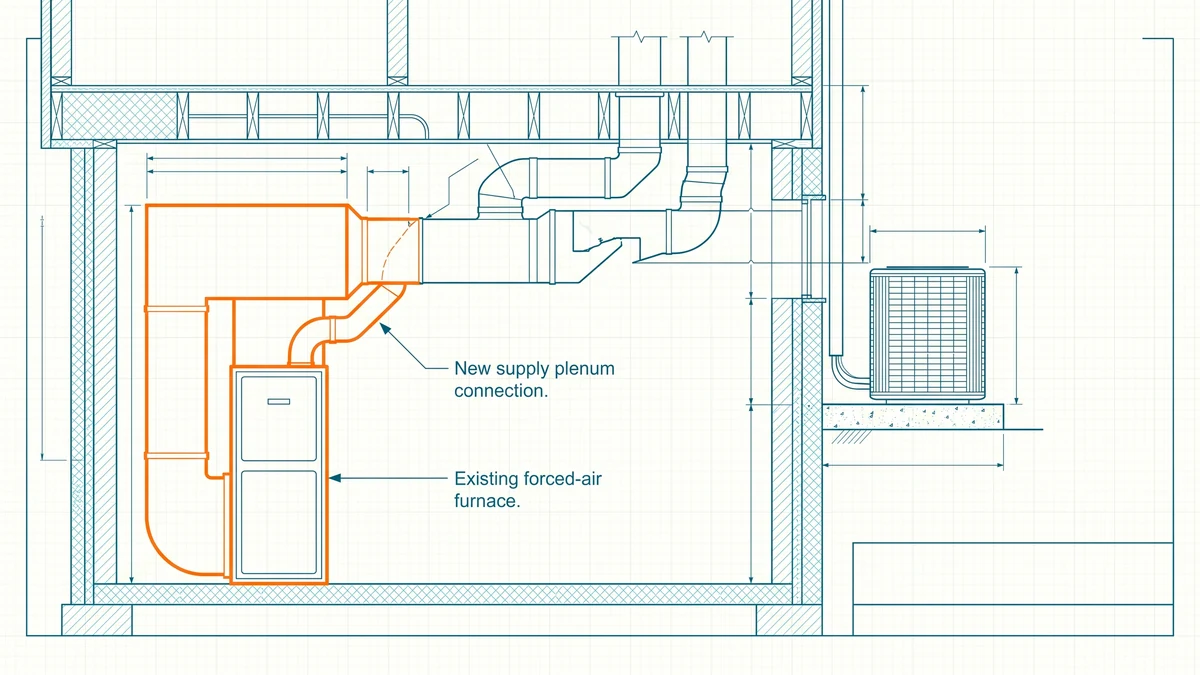
The short version
- In Toronto, replacing a furnace or boiler in a house is on the City's own list of work that does not require a building permit, and adding a cooling system to a house is on the same list.
- A permit generally comes into play when the heating system itself changes: installing a new system, modifying ductwork, or doing mechanical work in a building that is not a house.
- No building permit does not mean no paperwork. Gas work falls under TSSA rules and new electrical connections are filed with the ESA either way.
- Each Ontario municipality administers its own permits, so outside Toronto the same job can be treated differently. Check your local building department before work starts.
Do I need a permit to replace a furnace or AC in Ontario?
Short answer: In Toronto, generally no. Replacing a furnace or boiler in a house appears on the City's published list of work that does not require a building permit, and so does adding a cooling system to a house. A permit generally applies once you install a new heating system or modify one, including its ductwork. Confirm your specific project with Toronto Building, because the exemption is narrower than most people assume.
The Ontario Building Code sets the framework, but each municipality administers its own permits, so "do I need a permit" is answered by your city, not the province. Toronto publishes its list plainly. Other municipalities draw the line in different places, and a swap that is exempt in Toronto can trigger a heating permit elsewhere. This guide covers what Toronto exempts, where the permit requirement starts, and the two provincial regulators that apply to the work whether or not a building permit does.
When furnace or AC replacement does not need a permit in Toronto
Toronto's own list of work that does not require a building permit includes replacing a furnace or boiler in a house, and it includes installing additional cooling systems, gas fireplaces, air cleaners, in-line humidifiers, or hot water tanks in a house. That comes straight from the City's When Do I Need a Building Permit page, and it is the answer most homeowners are looking for: a like-for-like furnace swap or a new AC condenser on an existing house is normally not a building permit matter.
Notice the qualifier that does the work in that sentence: in a house. The exemption is written for houses, not for buildings generally. It also describes replacement and addition, not redesign. The moment the project stops being "new box, same system," you should re-read the next section.
Quotable: In Toronto, the building permit question for HVAC turns on whether the system changes, not whether the equipment does. Swapping the box is generally exempt. Changing what the system is, or how it distributes air, generally is not.
The same replacement logic shows up elsewhere in the City's list, which is why siding, window, and roof replacements follow a similar same-for-same pattern. For the full picture across project types, our pillar guide to what requires a building permit in Ontario walks the whole list.
When HVAC work does need a building permit
The City's permit-required list includes installing or modifying heating systems. In practice, the permit conversation usually starts when a project does one of these:
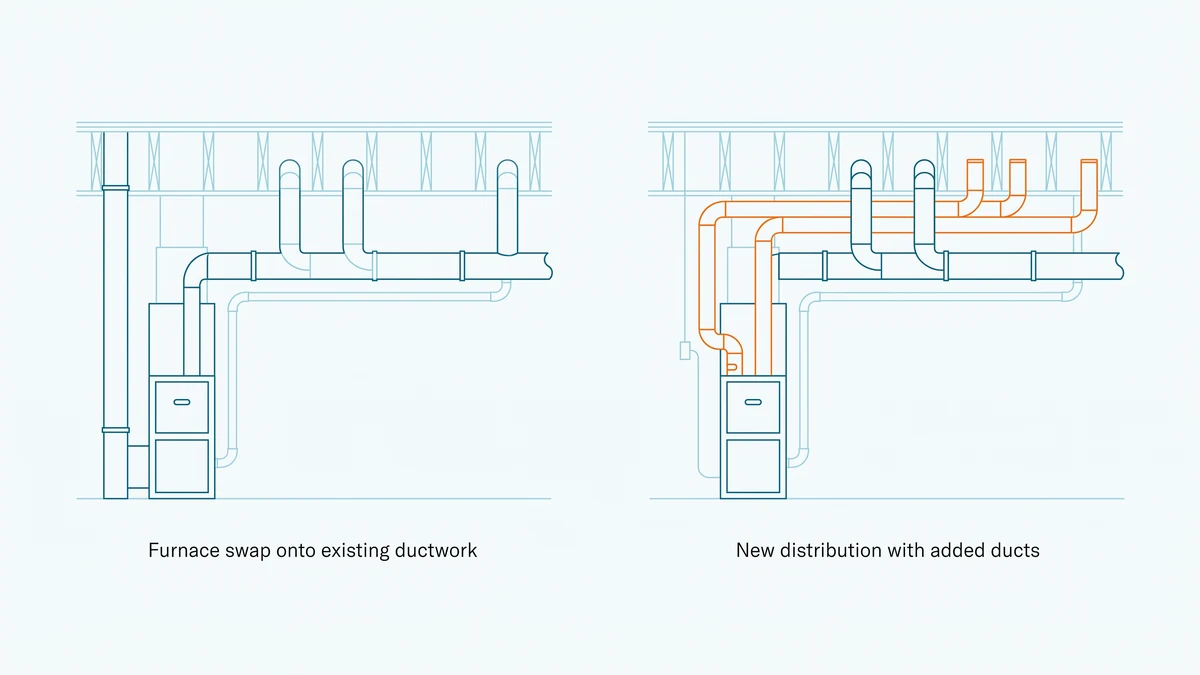
- Installs a new heating system where the previous one was different in kind, such as some furnace-to-heat-pump or boiler-to-forced-air conversions.
- Modifies ductwork or the distribution side of the system, which is common in basement renovations and additions.
- Touches a building that is not a house. Toronto issues stand-alone mechanical permits for HVAC work in other building types, and the City publishes a dedicated stand-alone mechanical (HVAC) application guide with its drawing and calculation requirements.
- Rides along with a larger permitted project. If your renovation already needs a building permit, the mechanical scope is typically permitted with it rather than exempted beside it.
Fees for mechanical permits are set by the City's fee schedule and change over time, so we do not quote them here. Our guide to HVAC permit cost in Toronto covers how the fee structure works and where to find the current numbers.
If any of this is ambiguous for your project, ask Toronto Building before the equipment is ordered. An exemption you assumed and got wrong becomes an order to comply later, at which point the permit still gets pulled, just with the work already in the wall.
No building permit does not mean no oversight
This is the part the exemption list hides if you read it too quickly. Two provincial regulators apply to furnace and AC work regardless of whether the City issues a permit.
Gas work is TSSA territory. In Ontario, work on gas-fired appliances, including connecting a new furnace, must be done by certified gas technicians working for a registered fuels contractor under the Technical Standards and Safety Authority regime. This is not optional and it is not municipal. A homeowner cannot legally connect their own gas furnace.
Electrical connections are ESA territory. New or altered wiring, such as the circuit for a new AC condenser or heat pump, is filed with the Electrical Safety Authority through an electrical notification, normally handled by the licensed electrical contractor doing the connection.
So a fully exempt furnace replacement still produces paperwork: the installer's fuel-safety credentials and, where wiring changes, an ESA filing. What it does not produce is a City of Toronto building permit record. If you want to verify the people rather than the permit, our guide to HVAC licences in Ontario covers what to check.
What Toronto's permit record shows about HVAC work
Because routine replacements are exempt, the permit record does not capture most furnace and AC swaps. What it captures is the system-changing work: new installations, ductwork alterations, and mechanical scopes inside larger projects. That distinction matters when you read the data.
Toronto has 28,514 building permits issued in the trailing twelve months currently on record as of Aug 26, 2026, and HVAC is one of the twelve trades we classify those permits into. You can browse live HVAC permits in Toronto to see what permitted mechanical work actually looks like, street by street. An address with no HVAC permit on file has not necessarily skipped anything: for a house, the likeliest explanation is that the work was exempt. The reverse reading is more useful. Where an HVAC permit does exist on a house, it usually marks a project that went beyond a swap, which makes the permit record a decent proxy for substantial mechanical work rather than routine maintenance.
How long does an HVAC permit take in Toronto?
If your project does need a permit, the wait that matters is the lag between applying and the permit being issued. The table below shows that lag by trade, as a median with the ninetieth percentile beside it, computed over permits issued in the trailing twelve months and still on record. These are observed issuance lags in the City's data, not a service commitment from the City.
| Trade | Median wait | 90th percentile | Permits (12 mo) |
|---|---|---|---|
| Window / Door | 13 days | 62 days | 778 |
| Deck | 22 days | 126 days | 1,394 |
| Interior alteration | 26 days | 95 days | 4,129 |
| Roofing | 27 days | 109 days | 485 |
| Electrical | 32 days | 94 days | 87 |
| Plumbing | 32 days | 257 days | 5,933 |
| Addition | 34 days | 170 days | 4,757 |
| Pool | 34 days | 101 days | 164 |
| HVAC | 35 days | 235 days | 4,321 |
| Demolition | 46 days | 231 days | 1,505 |
| New build | 65 days | 594 days | 2,997 |
Groups with fewer than 30 permits are omitted; a median over a smaller sample is noise.
Mechanical scopes tend to sit toward the faster end of that table, while whole-building work anchors the slow end. The gap between the median and the ninetieth percentile is worth reading too: a wide gap means a minority of applications run far longer than the typical one, so plan around the tail if your renovation has a fixed deadline. The full breakdown, including waits by postal area, is on the Toronto permit wait times page.
To see what is on record for a specific property, use permit search.
How these numbers are calculated
The citywide permit count on this page comes from seo_citywide_12mo and the wait-time table from seo_wait_by_trade, both computed live in SQL over the City of Toronto's open dataset of active building permits. Wait times are medians and ninetieth percentiles of the days between application and issuance, over permits issued in the trailing twelve months; records where the issue date precedes the application date are dropped, and any trade with fewer than thirty qualifying permits is omitted rather than reported.
Two limitations frame every number here. The dataset covers permits currently active, so figures describe permits on record, not a historical census. And because routine furnace and AC replacements in houses are exempt from permits in Toronto, the HVAC trade counts describe permitted mechanical work only, not the full volume of HVAC jobs done in the city. All figures are Toronto-only. Sourcing details are on the data sources page.
Frequently asked questions
- Does a new furnace need an inspection in Ontario?
- Not a City building inspection, unless the work needed a building permit in the first place. Gas-fired equipment must be installed by certified gas technicians working under Ontario's fuel-safety regime, which the TSSA oversees, and your installer handles that paperwork. If your project did require a building permit, City inspections follow the permit as usual.
- Do I need a permit to switch from a furnace to a heat pump?
- Possibly. Changing the type of heating system is exactly where the like-for-like exemption can end, because you may be installing a new system rather than replacing one, and the electrical service often changes too. Confirm the building permit question with your municipality before work starts, and expect the electrical side to be filed with the ESA regardless.
- Can my HVAC contractor pull the permit for me?
- Yes. Where a permit is required, the application can be filed by the owner or by an agent the owner authorizes, and contractors file routinely. Who files does not change whether a permit is required, and the permit attaches to the property either way.
- Are the rules different for condos and commercial buildings?
- Yes. Toronto's replacement exemptions are worded for houses. Mechanical work in other buildings, such as commercial interiors or multi-unit residential, commonly needs a mechanical permit either on its own or alongside a broader building permit. Check with Toronto Building before assuming an exemption applies.
- Will unpermitted HVAC work show up when I sell my house?
- Building permits are public record, so a buyer can look up what is on file for an address. If your work was exempt, an empty result is normal and expected. If the work did need a permit and none exists, that gap is visible to anyone who checks the record.