Toronto permit data
Demolition Permits in Toronto: When You Need One
Published August 29, 2026
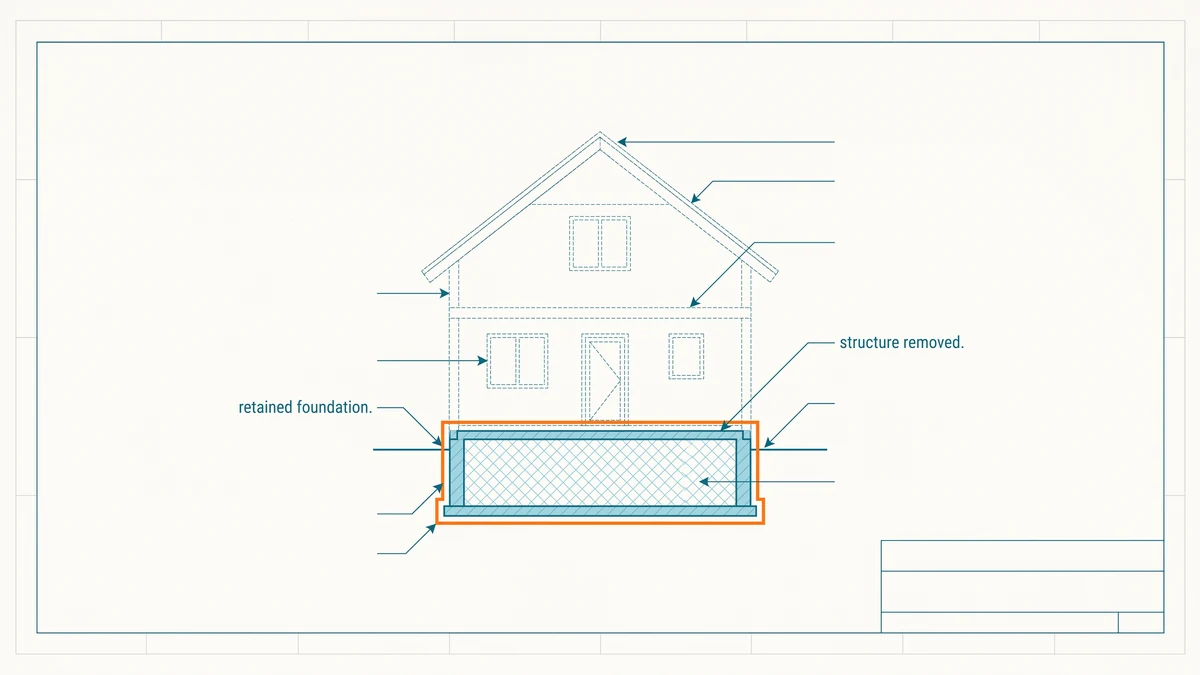
The short version
- In Toronto, tearing down a building or a section of one calls for a permit. The Building Code Act handles demolition as a permitted activity in its own right, distinct from construction.
- Residential demolition in Toronto is also subject to demolition control, which normally links the right to tear down a house to an approved replacement plan.
- Interior strip-outs sit in an unclear zone. Pulling out finishes is normally not demolition, but removing structure, or taking out a dwelling unit, generally is.
- Before demolition begins, utilities must be cut off, and workplace legislation in Ontario typically demands a check for designated substances like asbestos.
- Demolition permits rank among the slower categories in Toronto's records. The wait table on this page draws live from that data.
Do you need a permit to demolish a building in Toronto?
Short answer: Yes. Under the Ontario Building Code Act, tearing down a building is itself a recognized activity, so you need a demolition permit to remove a building or a major part of one in Toronto. Demolishing a house in the city also normally goes through demolition control, which links the right to take a house down to an approved replacement plan. Interior strip-outs are the unclear case: pulling out finishes is usually not demolition, but removing structure or a dwelling unit usually is. Check your project with Toronto Building.
Demolition is the permit people usually think is simpler than building, and it is normally the reverse. A building permit asks if what you plan is safe. A demolition permit asks the same thing, and then asks what becomes of the lot after, whether the structure holds anything hazardous, and whether the services feeding it have been disconnected. This guide explains when a permit is required, how demolition control alters the residential answer, where interior demolition fits, what must be done before the machines show up, and what demolition approvals look like in Toronto's actual permit record, which PermitIndex indexes daily.
When does demolition need a permit?
Ontario's Building Code Act makes a permit mandatory for tearing down a building, and its definition of demolition is wide enough to include taking out only part of a building, not just the whole thing. That rule forms the provincial standard across Ontario, and Toronto enforces it.
The everyday triggers are worth stating plainly:
- Demolishing an entire building, including a detached garage or an accessory structure that was big enough to require a permit when it was built.
- Taking out part of a building, such as tearing down a rear section before an addition is put in.
- Removing structure in the course of a renovation, including load-bearing walls, floor sections, and roof framing.
- Removing a dwelling unit, which is treated as a major act no matter how much physical structure is taken out.
The exemption reasoning works much like construction. A building small enough to be put up without a permit is normally one you can take down without a permit. A small garden shed usually falls on that side of the line; a detached garage usually falls on the other.
How does demolition control change the answer for houses?
Homeowners are often caught off guard by this, and it has nothing to do with the Building Code. Demolition control is a municipal authority over tearing down homes, and where it is in force the City can deny the request or place conditions on it. The goal is to prevent houses from being removed and properties left vacant, so in practice approval to demolish a dwelling usually depends on an issued building permit for the new structure.
Quotable: In Toronto, the practical question for demolishing a house is rarely whether you may take it down. It is what you have already been approved to put back.
That ordering genuinely affects how work gets scheduled. A project that presumes demolition can begin while the replacement design is still in progress usually has the order reversed, since the demolition approval may depend on the same permit the demolition was supposed to come before. If your project is a rear demolition before an extension instead of a full teardown, the home addition permit guide covers the construction side of that application, and how to apply for a building permit in Toronto covers the submission process generally.
Does interior demolition need a permit?
Interior tasks carry most of the real unpredictability, and the straightforward truth is that it hinges on what gets taken out, not on the quantity.
Stripping finishes is not usually classed as demolition. Drywall, flooring, cabinets, fixtures, and trim can typically be removed as part of upkeep or a renovation with no demolition permit required, though the renovation that comes after may call for a building permit in its own right. Taking out structure is generally demolition, and as soon as a wall bears load, a floor gets opened, or roof framing is removed, the job needs a permit and the plans must show what supports the load afterward.
Two edge cases get their own line. Taking out a dwelling unit, say turning a duplex back into one home, is usually counted as significant no matter how little structure changes. And a complete strip to the studs, occasionally sold as a renovation, sits near enough to demolition that you should check with the City instead of guessing. If you need to see what was approved before at an address, a permit search lists the building permit record for that property, and permit history of a house shows how to read it.
What has to happen before demolition starts?
Getting the permit approved is not the final step. Two more conditions usually sit between that approval and having a machine on site.
- Utility disconnection. Gas, electrical, and water lines entering the structure usually need to be cut off and verified by the appropriate utility ahead of demolition. In Ontario the electrical disconnection is handled by the Electrical Safety Authority, not the municipal building department, and that is a separate procedure with its own schedule.
- Designated substances. Ontario workplace law generally demands that designated substances, above all asbestos, be located before demolition or major renovation starts. When they are found, abatement becomes a distinct scope of work with its own steps, and it takes place ahead of the demolition, not alongside it.
Neither one is optional, and neither one moves quickly, which is a major reason demolition schedules get delayed. Both hit older buildings hardest, and older buildings make up most of Toronto's housing supply.
How long do demolition permits take in Toronto?
The permit record shows the result. Every Toronto permit includes both an application date and an issue date, and PermitIndex calculates the actual gap between those two dates for each trade, across all permits now on file. The table below draws live from that record, trailing twelve months, Toronto only as of Aug 26, 2026. Locate the demolition row and compare the median against the 90th percentile, since for this trade the two figures point to different findings.
| Trade | Permits (12mo) | Median wait | 90th percentile |
|---|---|---|---|
| Window / Door | 778 | 13 days | 62 days |
| Deck | 1,394 | 22 days | 126 days |
| Interior alteration | 4,129 | 26 days | 95 days |
| Roofing | 485 | 27 days | 109 days |
| Electrical | 87 | 32 days | 94 days |
| Plumbing | 5,933 | 32 days | 257 days |
| Addition | 4,757 | 34 days | 170 days |
| Pool | 164 | 34 days | 101 days |
| HVAC | 4,321 | 35 days | 235 days |
| Demolition | 1,505 | 46 days | 231 days |
| New build | 2,997 | 65 days | 594 days |
Groups with fewer than 30 permits are omitted; a median over a smaller sample is noise.
Demolition sits toward the slow end of this table, and its 90th percentile is one of the longest on it. That shape is what a coupled approval looks like in data: the middle of the pack moves at a normal pace, while a long tail waits on the replacement building permit, on demolition control conditions, or on abatement. These are observed issuance lags among permits currently on record, not a City service standard, and they measure the wait to be issued rather than the time the demolition itself takes. To see what demolition projects were actually permitted near you, browse live demolition permits in Toronto, or compare every trade on the Toronto permit wait times page.
What happens if you demolish without a permit?
Unlawful teardown is tougher to correct than nearly every other permit breach, simply because the structure cannot be restored. The City may hand down an order, and where demolition control is in force, removing a house without approval can leave an owner stuck with an empty lot and no sanctioned path to put a building back on it. Enforcement runs smoother in this case too, since demolition is plain from the curb and draws complaints.
The second exposure comes from safety law, not building law. Tearing down a structure that holds designated substances without the mandated survey and abatement falls under workplace health and safety, and securing a permit later does not fix it. What happens if you build without a permit in Ontario addresses orders and legalization for construction work, and the same habit holds here: verify beforehand, not afterward.
How these numbers are calculated
The wait-time table on this page is produced by the seo_wait_by_trade aggregate, which computes a SQL median (percentile_cont(0.5)) and 90th percentile across the days between application and issuance for City of Toronto permits issued in the trailing twelve months. Records where the issue date comes before the application date are removed, groups with fewer than 30 permits get no row instead of an unreliable figure, and the classifier's catch-all bucket is left out because it covers unknown work, not a trade. PermitIndex derives trade categories from the City's permit descriptions, since the source data carries no such field. The freshness stamp is taken from seo_citywide_12mo, the newest issue date in the data, not the date you opened the page.
Two restrictions are in force. The City releases permits that are active right now, so each number reflects permits on file today, not a full record of the past, which explains the twelve month window and the absence of any annual comparison here. The data also covers Toronto alone, so although the Building Code Act governs all of Ontario, the figures on this page say nothing about any other municipality. For the source dataset and its licence, go to the data sources page.
Frequently asked questions
- Do I need a permit to demolish a house in Toronto?
- Correct. Under the Ontario Building Code Act, tearing down a structure calls for a demolition permit, and in Toronto a residential demolition usually brings in demolition control as well, tying the right to demolish to what goes up in the house's place. On the ground, that means approval to demolish and the building permit for the replacement move through together, not as separate applications.
- Do I need a permit for interior demolition?
- What gets taken out changes how the work is classified. Pulling off finishes like drywall, flooring, and cabinets usually counts as upkeep, not demolition. Tearing down load-bearing walls, cutting through floors or the roof frame, or reducing a building to its skeleton is structural work and normally needs a permit. Removing a dwelling unit is handled as a serious matter on its own, apart from the structural issue.
- Do I need a permit to demolish a garage or a shed?
- Most of the time a garage does require one, while a small shed frequently does not. The dividing line follows the same reasoning used for building: a structure that was small enough to be built without a permit typically does not need one to be torn down. A detached garage usually sits past that threshold. Check with the City before taking anything down, since the answer also hinges on whether the structure connects to something else.
- What is demolition control in Toronto?
- Demolition control is a municipal authority that allows the City to deny or set terms on the demolition of residential buildings, usually to stop homes from being removed and properties left empty. Where it is in force, approval to demolish is typically linked to an accepted building permit for the new house, and the approval can carry conditions. It sits apart from the Building Code issue of whether the work is safe.
- What has to happen before demolition can start?
- Before a machine reaches the building, gas, electrical, and water lines normally must be disconnected and the work signed off by the responsible utility. Ontario workplace rules also generally demand that designated substances such as asbestos be located before demolition or major renovation starts, so a survey comes first and, if any are present, a separate abatement job precedes the demolition.